TasTAFE’s new Future Seeds Program is helping to protect Tasmanian ecosystems
Published on: 29 Jan 2026
Future Seeds Program volunteers begin their quest to collect 1 million native seeds at the Arve Valley seed collection workshop.
In late 2025 the TasTAFE Primary Industries team launched the Future Seeds Program, helping to future-proof Tasmanian ecosystems from natural disasters and positioning TasTAFE as a leader in environmental recovery.
Tasmania is home to an incredible range of plants, some of which are found nowhere else on Earth. However, new challenges are threatening these unique species. Bushfires and flooding events are predicted to become more regular and more severe, while long-term changes in rainfall and temperature threaten to disrupt bird and insect behaviours and plant pollination cycles.
There are several seed banks already up and running around Tasmania, but the state’s ability to support large-scale revegetation across the island is limited, economically and logistically.
James Black, TasTAFE Conservation and Ecosystem Management teacher, summarised the aims of the Future Seeds Program:
“The idea of the program is to create a Tasmanian seed bank to conserve up to 1 million seeds of pioneer species for revegetation of landscapes.
“This is important because if we have mega fires come through these areas, they could destroy the natural seed bank, and we won't have the available seed on hand to restore these ecosystems back to their current state.”
Supported by the Australian Government’s Disaster Ready Fund, the Future Seeds Program is helping to meet these ambitions by:
- running native seed collection workshops
- developing a secure, scalable seed bank
- working with communities and partners to build awareness and improve ecosystem recovery efforts; and
- designing digital tools to capture and analyse seed data – including species, flowering/pollination times, collection locations, and risks to seed availability – and model the impacts of climate change on pollination cycles.
This program has also brought some new equipment to TasTAFE – a seed drying room, refrigerated seed bank, native grass harvester and 2 grass thrashers – maintaining training quality and ensuring TasTAFE Primary Industries learners are working with the latest technology.
Co-delivered with the Derwent Catchment Project, City of Hobart, Tasmania Parks and Wildlife Service and Landcare Tasmania, the first rounds of the program’s volunteer seed collection workshops were held recently in the Arve Valley and the Hamilton region.
With transport and all equipment provided (tools, gloves, bags etc), volunteers learned the key principles and safety guidelines for collecting native seeds; received hands-on experience with practical seed-collection techniques; and learned how to harvest seeds ethically and sustainably.
Speaking on-site at the Arve Valley workshop, James Black said there is a narrow window of opportunity in which to collect seeds each year.
“It is often quite hard to find seeds, as plants flower at various times of the year – but generally [they flower] between December and February, over summer.
“If you arrive too early, the seeds haven’t matured and you can’t harvest them; or if you arrive too late, the seeds might have dropped off the plant.”
James and his team of volunteers kicked off the workshop by harvesting seeds from 9 different native species in the Arve Valley. It may be some time until they meet their target of 1 million seeds – but from little things, big things grow.
A further 6 annual seed collection workshops are planned for 2026 and 2027.
For more information on the Future Seeds Program, including upcoming volunteer opportunities, contact primaryindustries@tafe.tas.edu.au.
See the TasTAFE website for details on our courses in Conservation and Ecosystem Management and Horticulture.
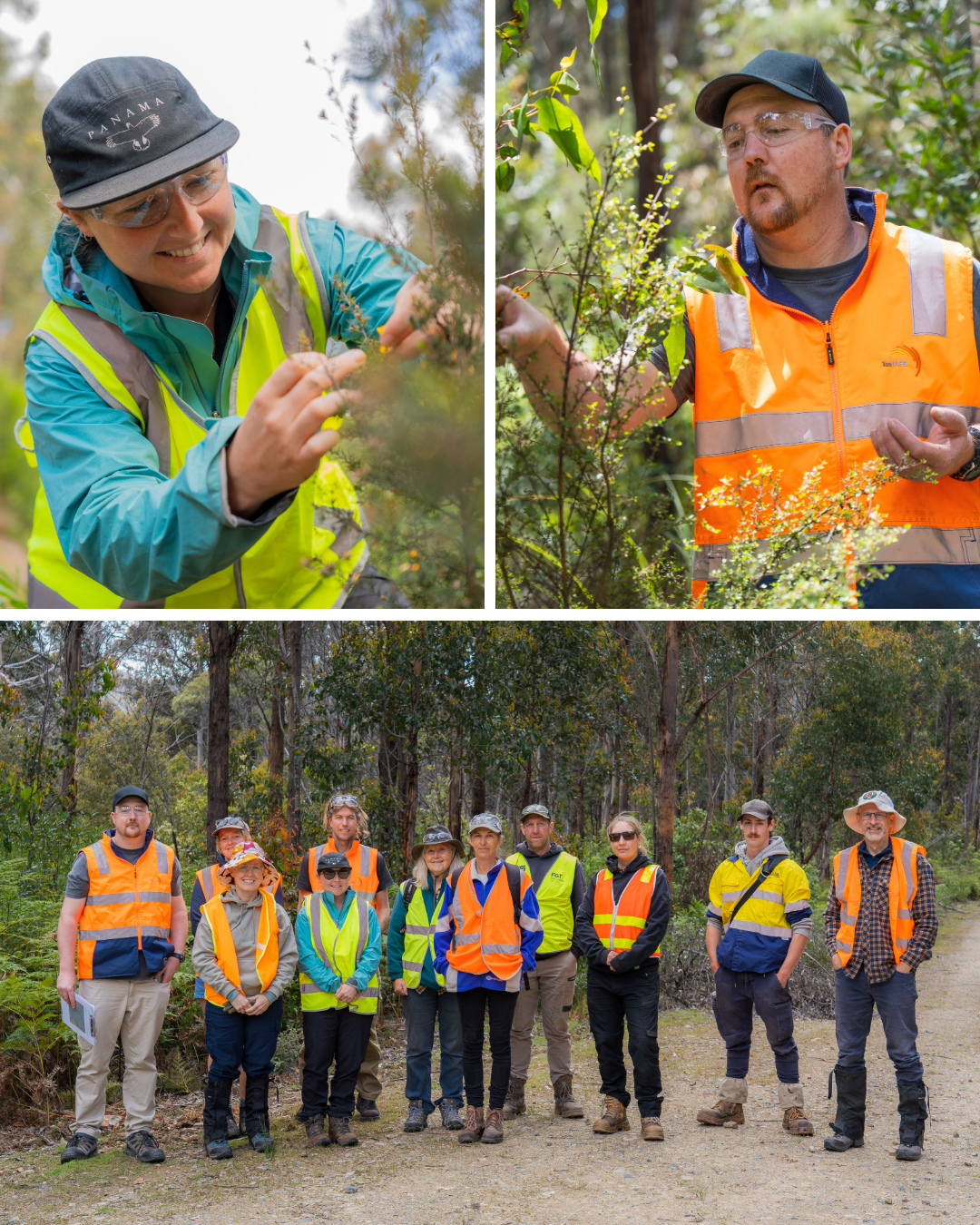
Scenes from the TasTAFE Future Seeds Program seed collection workshop in the Arve Valley. Top right: James Black, TasTAFE Conservation and Ecosystem Management teacher.