Tasmanian chef Paul Foreman is helping to nurture the next generation of TasTAFE cookery apprentices
Published on: 27 Apr 2026
Chef Paul Foreman listens to the career aspirations of TasTAFE cookery learners at Collins Street Campus.
Chef, restaurateur, caterer, consultant, mentor, MC – Tasmanian hospitality leader Paul Foreman wears plenty of hats these days.
But how does an experienced professional like Paul feel about training the next generation of Tasmanian chefs? How can TasTAFE and industry work together to promote better outcomes in the profession he loves?
Paul shared his thoughts on a recent visit to mentor learners at TasTAFE’s Collins Street Campus in Hobart.
“I think there needs to be more collaboration [between TasTAFE and industry],” Paul said. “That's one thing I'd really love to see – more of an intertwining of communication, which I think would be hugely beneficial. Like anything, we all have different irons in different fires – but if we put them all together, we're going to have something that's quite solid.”
TasTAFE’s Head of School for the Visitor Economy Lauren Sheppard, agrees.
“We are continuing to challenge the status quo and welcome collaboration with industry bodies to find solutions to address industry needs,” Lauren said.
“Warmly welcoming Paul to TasTAFE as a colleague and industry representative is an example of our collaborative mindset, and our learners valued the opportunity to hear from a local industry professional.”
From the industry side of the kitchen, Paul sees plenty of opportunities for businesses to better support Tasmania’s future chefs.
“The time you put into an apprentice is really important – what you put in is what you get out. And it's a two-way street. You've got to work together – not just treat an apprentice as a spud-peeler in the background. That has to be done because that's your foundation, but respect and nurturing along the way is really important as well.”
Paul also thinks that scheduling time for communication is essential to building a supportive working environment – despite the challenges of finding the time in busy service environments.
“Part of the working week is stepping out of the kitchen. Nothing happens through service because of the pressures but having that communication time is really important. Time is money and we're always time-poor – but it can be done, even if it starts out at half-an-hour a week – put into the roster system. Making time to talk about what you're doing, rather than just working, is really important [to nurture staff],” Paul said.
Good mentorship that recognises an individual’s particular skills is something that Paul is also passionate about – and something that Certificate III in Commercial Cookery apprentice James Matar has benefitted from at TasTAFE.
“I think the community at TasTAFE is super-important for apprentices,” James said. “One of the things that we focus on a lot is attention to detail – I really love details. And in my first year in my first class, my teacher said to me, ‘It's all about the details.’ And I was like, ‘This is my spot!’ ”
James has found his ‘spot’ as an apprentice chef – and thanks to the mentorship of people like Paul Foreman and his TasTAFE teachers, he’s feeling positive about the hospitality industry and his place in it.
“You meet so many new people all the time,” James said. “You get to be around good smells, good tasting food. The hours can be long, but the rewards you get at the end of the day when you go home and you feel like you've earned your sleep, that’s the best feeling in the world.”
To pursue your dream of working in tourism, hospitality or food, or to gain additional skills and qualifications, check out TasTAFE’s study options.
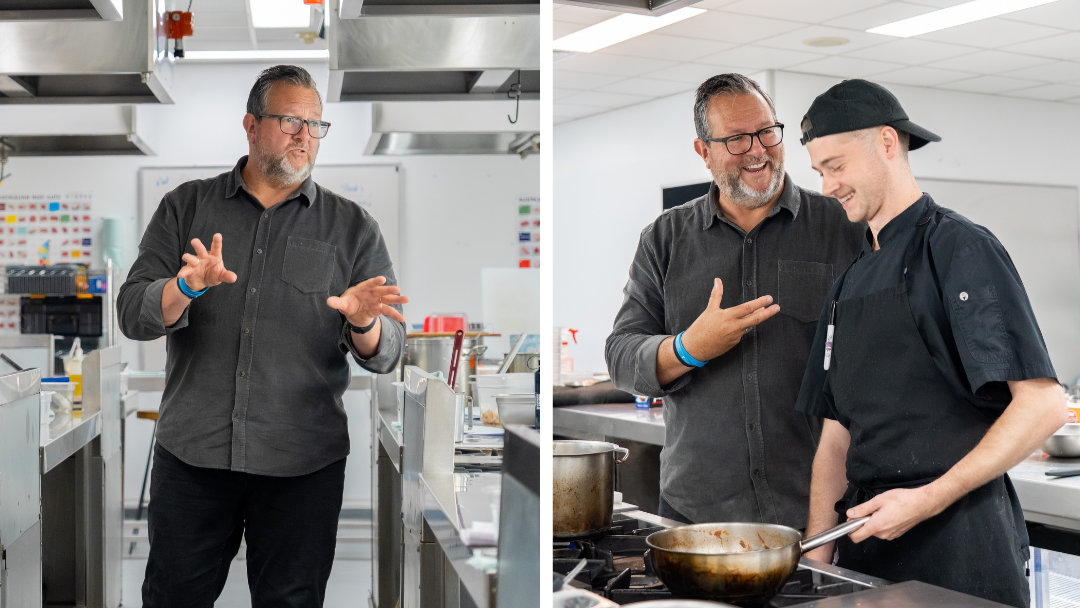
L: Paul shares his industry experience with TasTAFE cookery learners.
R: No pressure! Paul watches apprentice chef James Matar as he prepares a braised lamb dish at TasTAFE’s Collins Street Campus.