Industry Advisory Groups and Regional Industry Consultations – aligning TasTAFE training with industry needs
Published on: 20 Jan 2026
Matt Dance, TasTAFE Senior Manager Industry Engagement, with Vanessa Skipworth, Tasmanian Minerals, Manufacturing & Energy Council (TMEC) General Manager – alongside the CNC simulator installed at TasTAFE’s Bender Drive Campus.
In 2026, TasTAFE’s 7 Industry Advisory Groups and regular Regional Industry Consultation events are working to align our training with workforce needs and improve outcomes for our learners.
TasTAFE’s Agricultural Training Centre of Excellence in Burnie opened in 2023, overseen by a steering committee who advised on design and training requirements. The success of the Centre, both as a fit-for-purpose facility and in training delivery, garnered support from the TasTAFE Executive to formalise an Industry Advisory Group (IAG) for the following Centres of Excellence and industry areas:
- Agriculture
- Automotive
- Clean Energy
- Construction
- Electrotechnology and Plumbing
- Hospitality and Tourism
- ICT
Some of these groups were already up and running: TasTAFE’s Water and Energy Trades Centre of Excellence at Clarence Campus (2024) and Cyber Innovation Training Hub at Campbell Street Campus (2023) both benefitted from consultation with steering committees. Historically, our hospitality, tourism and cookery delivery teams have also engaged with an IAG.
Building on this expertise, TasTAFE Construction, Automotive and Clean Energy IAGs will come into effect in 2026.
TasTAFE Senior Manager, Industry Engagement, Matt Dance has been involved in many of these group and committee meetings over recent years.
“What we've found through these processes is that getting a group of key stakeholders around a table to advise on TasTAFE’s priorities in a structured and meaningful way, has a lot of value,” Matt said.
“Over the past 12 months we’ve looked at the methodology behind what we've already established, and how this applies across other priority areas and delivery teams: what's the best method of engagement to suit them and their industry? We haven’t taken a cookie-cutter approach – it's not one size fits all.”
The TasTAFE IAGs meet quarterly, bolstered by additional Regional Industry Consultation events twice yearly in each of Tasmania’s 3 key regions – northwest, north and south – across the following industry areas:
- Aged Care
- Community Services
- Disability
- Early Childhood
- Metals and Manufacturing
- Primary Industries (including Sports Turf)
“Our Regional Industry Consultations are open invitations to industry to come on campus, meet our delivery teams face-to-face and get a feel of what's happening,” Matt Dance said.
“They’re also a chance for us to give operational updates, and for industry stakeholders to provide feedback around their current engagement with TasTAFE: what's working well, and where there are opportunities to improve.
“Again, all of this is done to provide a platform for industry to connect with TasTAFE in a meaningful way, advising on what our training priorities should be.”
IAG participation is voluntary, targeting an appropriate representation of major TasTAFE stakeholders across the employer network.
“We work with employers that we interact with the most, or who are the bigger hosts of our apprentices,” Matt said, “– plus small-to-medium business whose needs might be different to the bigger employers. There are also peak industry association representatives who are committed to making sure that TasTAFE is accountable and the best version of itself as a public provider.”
IAG meetings are structured flexibly – often online, sometimes face-to-face and occasionally in a hybrid format – and generally run for a couple of hours, delivering a rolling action plan that can be subsequently addressed.
“To get buy-in from our members, we need to make sure that we're accountable to the feedback and that we receive – and there have been a number of instances where that feedback has made meaningful impact on delivery methodology or the development of new product, enhancing our learner experience,” Matt said.
A prime example is TasTAFE’s partnership with the Master Plumbers Association of Tasmania in establishing an Industry Engagement Officer role, supporting TasTAFE learners by working closely with plumbing industry.
“From our Industry Advisory Group consultations, what was really clear was the lack of consistency with how our teaching area was engaging with plumbing employers,” Matt said, “– which led to the appointment of Natalie Kingston in the Industry Engagement Officer role.”
“Our plumbing learners should now feel that they've got multiple levels of support available to them, not just from TasTAFE but also from industry,” Matt added.
“My new role allows me to speak to the plumbing industry about the training here at TasTAFE and provide feedback so we can close any gaps between what is being taught and what is needed in industry,” Natalie said.
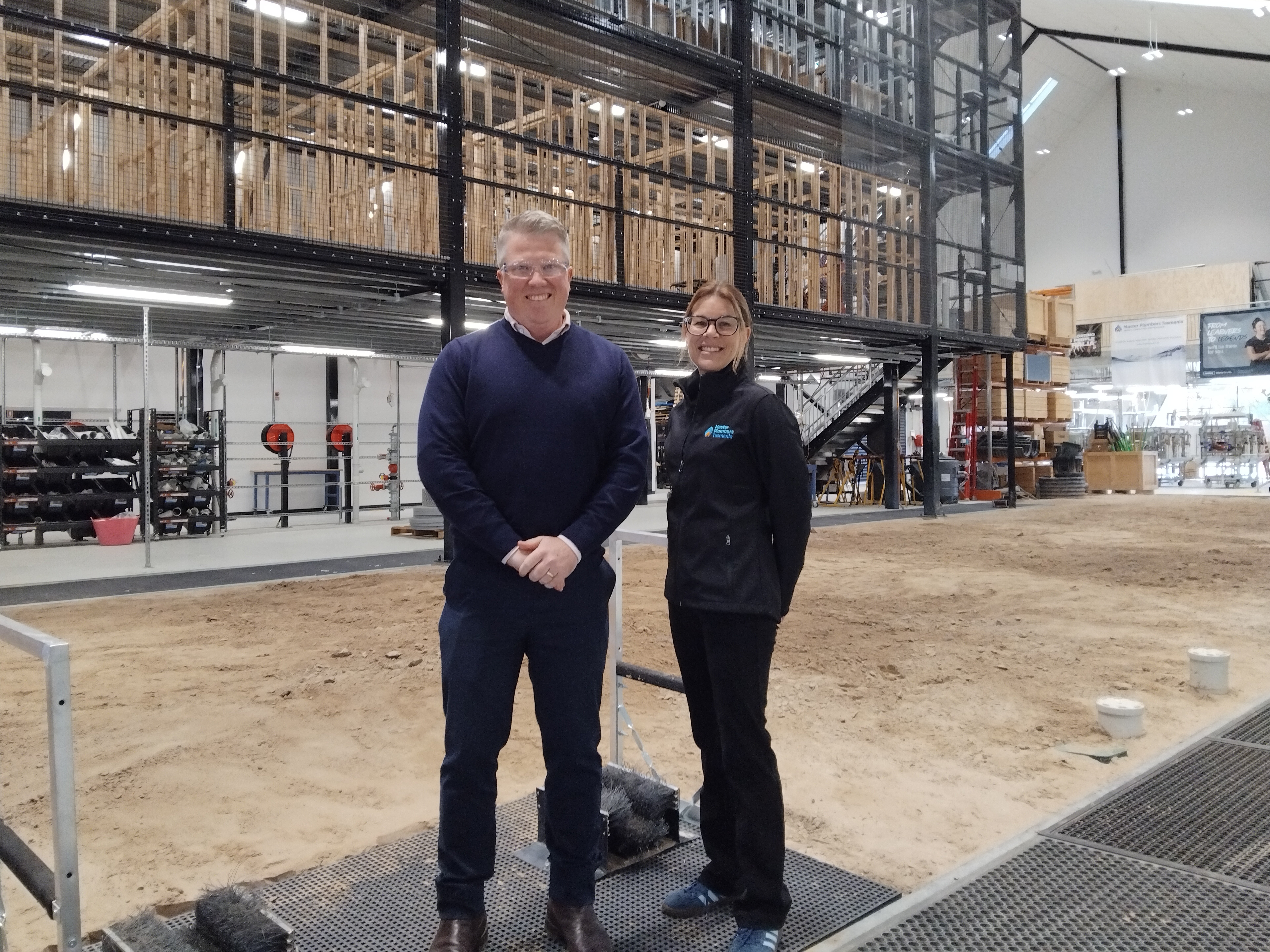
Matt Dance, TasTAFE Senior Manager Industry Engagement, with Natalie Kingston, Master Plumbers Association of Tasmania Industry Engagement Officer, at the TasTAFE Water and Energy Trades Centre of Excellence at Clarence Campus.
Another win to emerge from TasTAFE industry consultation is our engagement with new Computer Numerical Control (CNC) technology in our metals programs.
“We weren't doing any training in that space back in 2022,” Matt said, “– so industry said, ‘Look, this is a growing area: what are you doing about it?’ ”
“From that feedback we recruited a dedicated CNC trainer and developed bespoke non-accredited CNC training product, advised and endorsed by industry. We also partnered with the Tasmanian Minerals, Manufacturing & Energy Council (TMEC), working with General Manager Vanessa Skipworth, to purchase a CNC simulator for our Bender Drive Campus.”
Some IAG feedback TasTAFE can respond to quickly; other responses take time. But taking an accountable, holistic approach to industry engagement through Industry Advisory Groups and Regional Industry Consultation events is aligning TasTAFE training with industry needs and setting our learners up success, in 2026 and beyond.