Hotels, bars, restaurants and beyond – TasTAFE Hospitality graduates are keeping the local industry humming
Published on: 17 Feb 2026
Jack Smith, TasTAFE Certificate II and III in Hospitality graduate, is shaking things up in the Story Bar at MACq01.
From Hobart seafood restaurants to cellar doors in the Tamar Valley, bars in Burnie and hotels in Strahan, the Tasmanian hospitality industry is thriving – and TasTAFE Hospitality graduates are serving customers with a smile.
TasTAFE graduate Jack Smith completed both his Certificate II and Certificate III in Hospitality at Collins Street Campus in Hobart in 2025 – and is now working in the Story Bar at MACq01 hotel on the Hobart waterfront.
As part of his Certificate III studies, Jack completed a 2-week work placement at the prestigious MACq01 – and impressed his managers so much that they offered him an ongoing position.
Jack described his pathway to TasTAFE and MACq01 as a search for something less nocturnal than working in a noisy nightclub.
“I had a few gap years after I finished school in 2020,” Jack said. “Then I landed a job at [former Hobart nightclub] Obar, and did that for a few years. Then I wanted to expand: I didn't want to just be constantly behind the bar at a nightclub. I thought I might like to do something a bit more relaxed during the day!”
Jack’s journey towards gaining his Hospitality qualifications is one of many similar stories: TasTAFE Hospitality Teacher Nicole Jordan said that our Hospitality learners come from all walks of life.
“We get 16-year-olds who don't want to do Year 11 and 12; and lots of people around 18 or 19 who’ve finished school and are looking for a career pathway. Then we get mature-age learners who want to make a change – which makes for a really diverse group in the classroom, all sharing their experiences, which is great,” Nicole said.
The cohort may be diverse, but a motivation they share is learning about good customer service.
TasTAFE Hospitality learners gain the practical, teamwork and time-management skills they need to make a great martini or wait tables at a high-end restaurant – but just as important are the confidence and communication skills required to interact effectively with customers.
“It’s a course that builds confidence in our learners,” Nicole said “– especially when they get into the Drysdale Restaurants that we operate in Hobart, Launceston and Devonport. Stepping away from the computer, they really leave their comfort zone and develop so much confidence. It's incredible to see.
“And even if they don’t continue into hospitality careers, they've learned these great customer service skills that they can apply in any industry they work in.”
In an increasingly digital age, Jack Smith agreed that these ‘human’ skills are a key part of succeeding in the hospitality industry, helping to bring the ‘feel-good’ factor to work.
“Interacting with people is one of the great things about the job,” Jack said. “It can be a bit ‘scripted’: you say ‘Hello’, they say ‘Hello’ back, you ask them a few questions… Or it can be a more leisurely kind of interaction. You never know who you're going to meet, and you might have a really nice experience talking with them. And when you look after someone and they feel good about it, that makes you feel good too.”
Flexible learning is another benefit that the TasTAFE Hospitality programs can offer learners, as Nicole Jordan explained:
“We’ve responded to industry feedback saying that people want to be able to work as well as study. So now, anybody that's working in industry can actually enrol in the Certificate II or III in Hospitality at TasTAFE, then decide which units are best suited to where they're working. If they're in a cafe, they'll do cafe-focused units. If they're in a cellar door, they'll do cellar door units. If they're in a B&B, they’ll do accommodation reception…
“And they can come into classes on-campus if they like, or they can do it all online and have an assessor go out to them. They’ve got different options,” Nicole said.
Diverse learners, diverse learning models and diverse career outcomes – an environment that reflects the varied nature of the Hospitality industry.
‘It is a really broad industry,” Nicole agreed. “Our graduates can be working in events. They can be working in fancy hotels, in restaurants, cocktail bars, cafes, wineries, distilleries… They might want to work at the airport; they might want to work on a cruise ship; they might want to be a flight attendant… If they’re in hotels, they might go on to become a concierge or a Duty Manager or a General Manager.
“Whatever inspires them, there are huge job opportunities here in Tasmania. Hospitality is a great space to work in.”
Interested in kick-starting your Hospitality career? Read more about the Certificate II and Certificate III in Hospitality at TasTAFE, both available via Fee-Free TAFE.
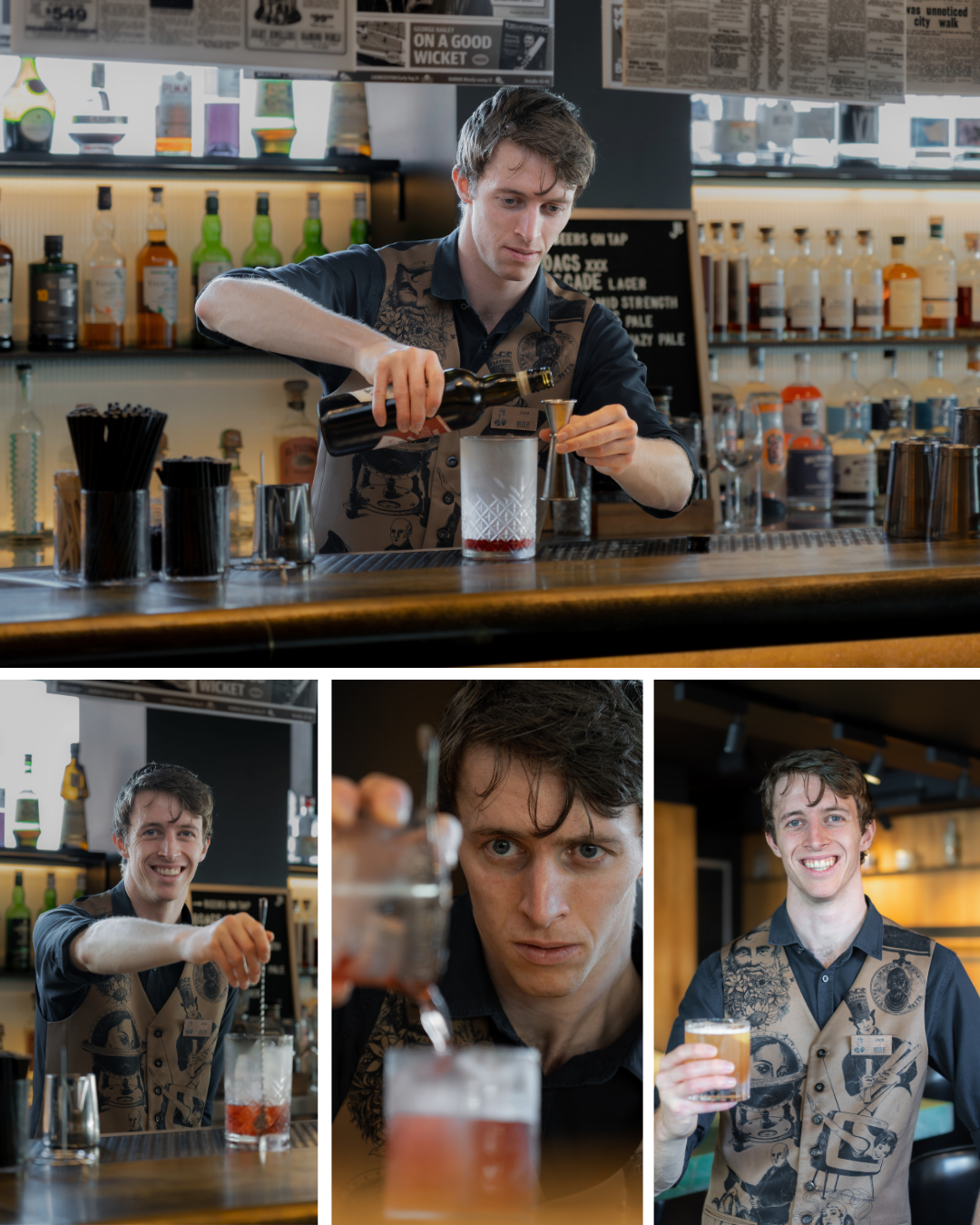 Jack Smith shows us how it's done behind the bar at MACq01.