Hands-on training delivers tangible outcomes while protecting delicate ecosystem
Published on: 25 Jun 2026
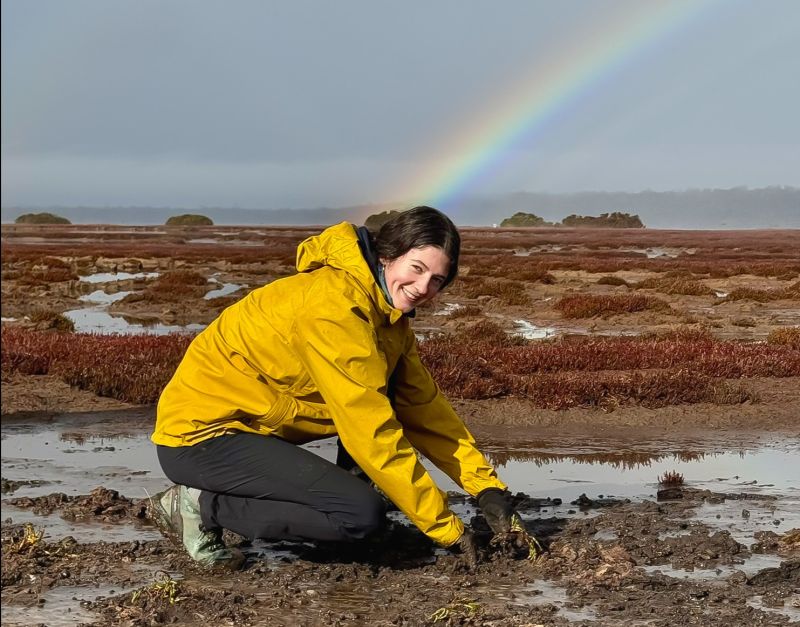
TasTAFE, UTAS, NRM South and Landcare Tasmania have partnered together to repair damaged areas of internationally significant wetlands at Moulting Lagoon on the Tasmania’s East Coast. Photo: NRM South / Amelia Jensen.
Moulting Lagoon, on Tasmania’s east coast, is one of the State’s most prized natural ecosystems – so special in fact, that it’s listed as a wetland of international significance under the Ramsar Convention; an international intergovernmental treaty adopted to protect and save significant wetland sites.
The vast Moulting Lagoon area is home to large numbers of migratory birds, threatened species, marsupials, eagles, fish, and crabs – many of whom rely on healthy saltmarsh habitat for food and shelter and to keep the ecosystem functioning. Unfortunately, historical grazing practices in some parts of Moulting Lagoon have caused the decline of the saltmarsh, making it difficult for native species to recover and thrive.
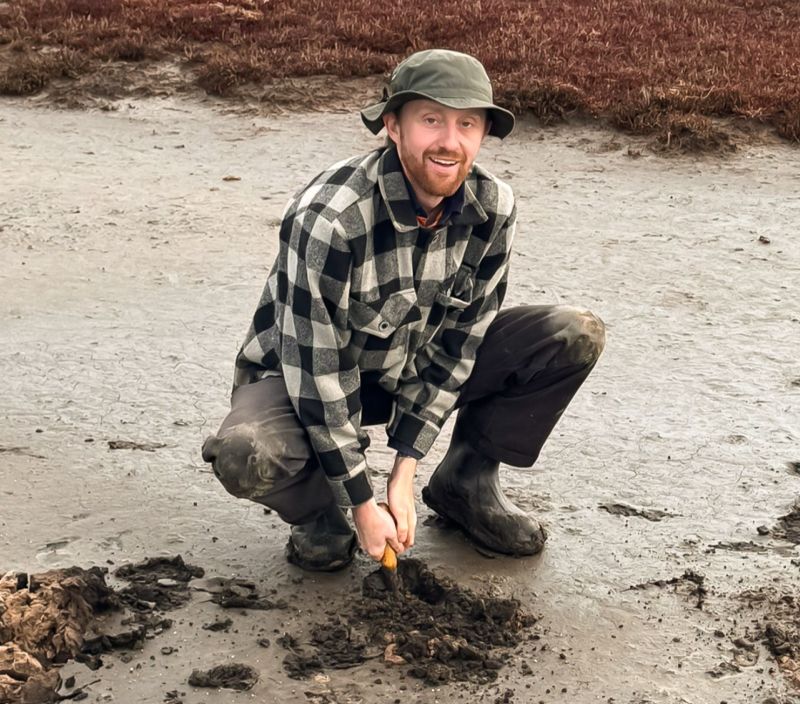
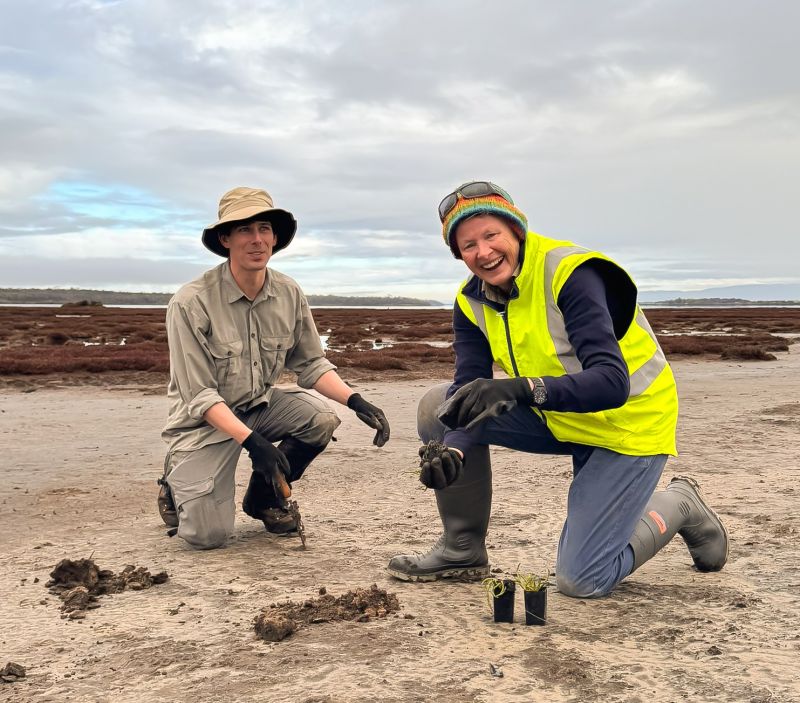
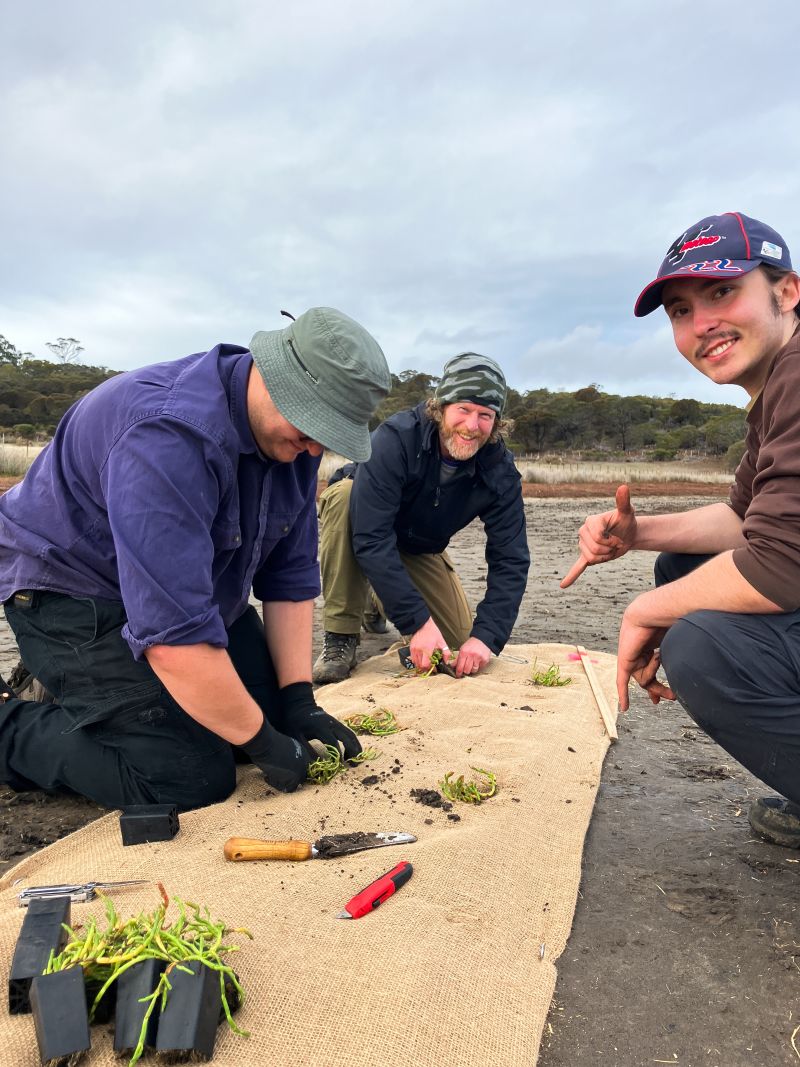
Through a collaborative partnership with NRM South, UTAS, and Landcare Tasmania, learners from TasTAFE’s Certificate III in Conservation and Ecosystem Management are playing an active role in the restoration of degraded saltmarsh at Moulting Lagoon. Using novel techniques pioneered by saltmarsh researchers at UTAS, TasTAFE learners rolled up their sleeves for two days and installed 40 new habitat structures and planted more than 2,000 saltmarsh seedlings – a huge effort which is bound to give our native species a much-needed helping hand. These efforts will also help to address climate change impacts, through improved carbon sequestration.
“Partnerships such as this are so important in conservation and ecosystem management – we get so much more bang for our buck when we work together,” said TasTAFE Teacher in Conservation and Ecosystem Management, Anthony Mann.
“For our learners, it’s been a great opportunity to work alongside industry practitioners - not just to learn new skills, but to contribute positively to the conservation of our natural places. We had lots of fun, and it was the ultimate learning experience”.
Anthony said experiences such as these, combining classroom teaching with hands-on learning, give TasTAFE learners a unique practical skillset which is highly regarded by employers in the field of Conservation and Ecosystem Management.